
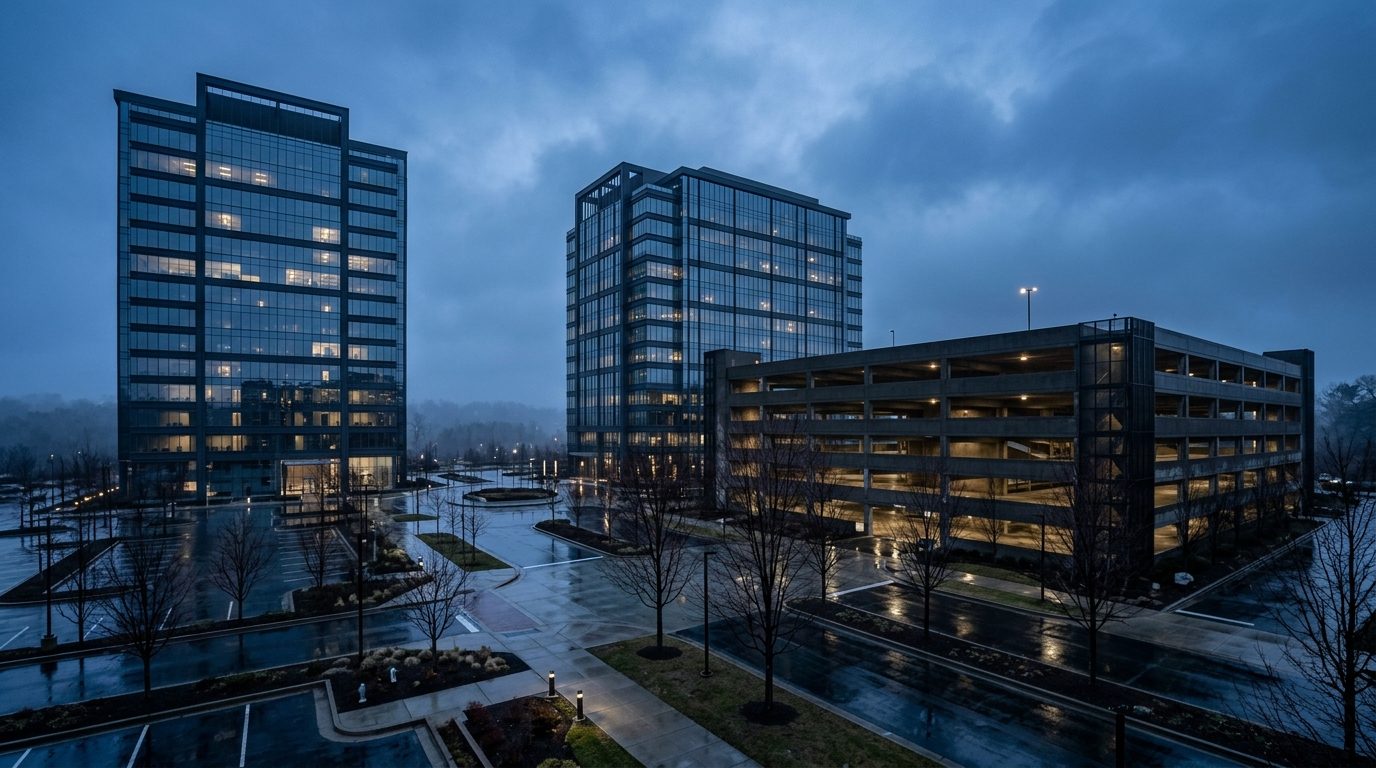
Guards, cameras, badges, evacuation, medical response — every one of them runs on a network somebody else owns, and stops where that network stops. dot SAGA builds the layer underneath: a communications network you own, independent of cellular and Wi-Fi, carrying people, alarms, location and access on one system into one live command picture.
We deploy it across ski resorts, alpine terrain, industrial sites and corporate campuses — anywhere the number of people is large, the geography is unforgiving, and the answer to where is everyone right now has to be immediate.
Most safety products are a device looking for a network. We start from the network — because concrete, terrain and outages are what actually decide whether a call for help arrives.
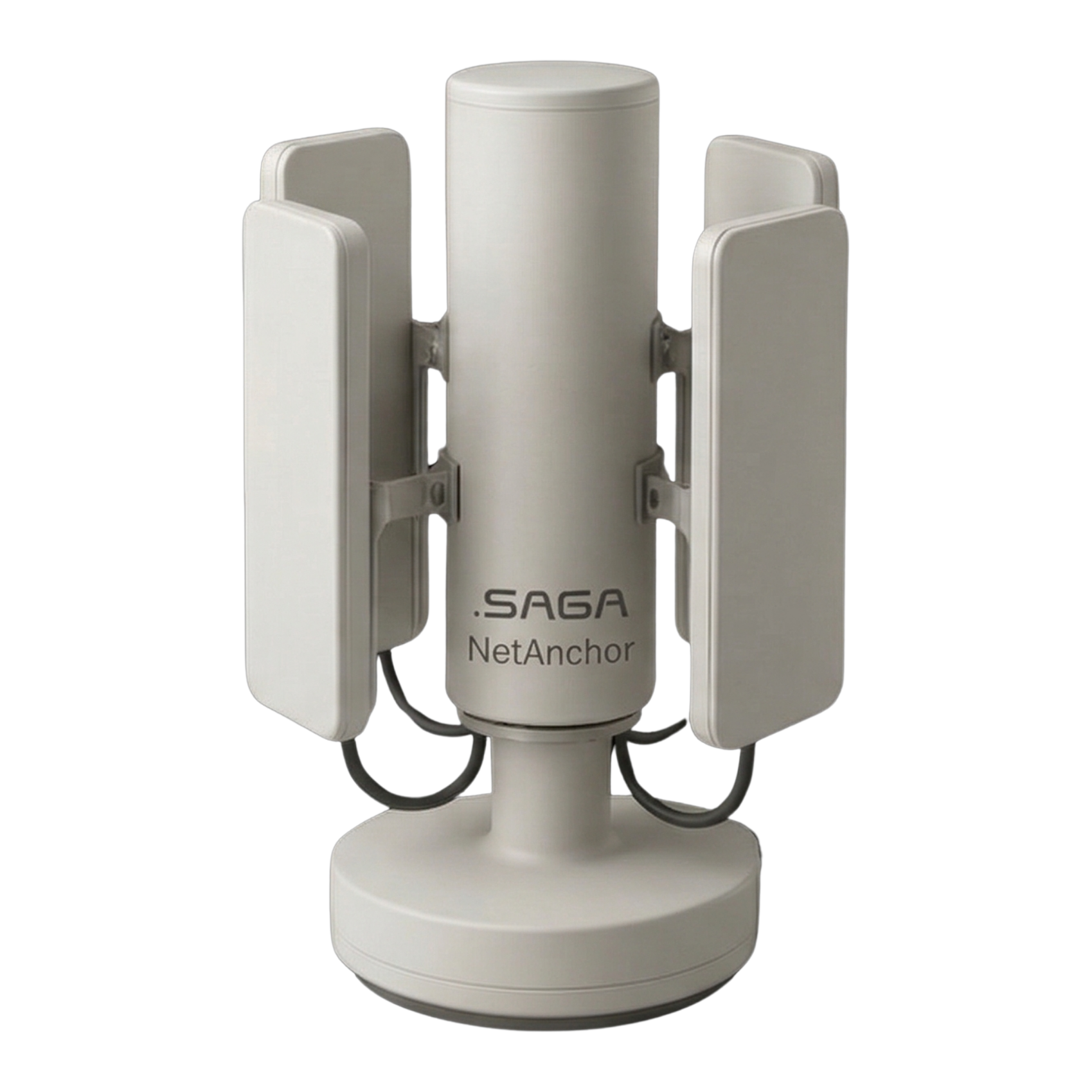
Nodes that form their own network, heal around a failure, and reach into the places public networks do not — underground levels, stairwells, back-of-house, open terrain. It keeps running through an outage, and it is ours to guarantee rather than someone else's to explain.
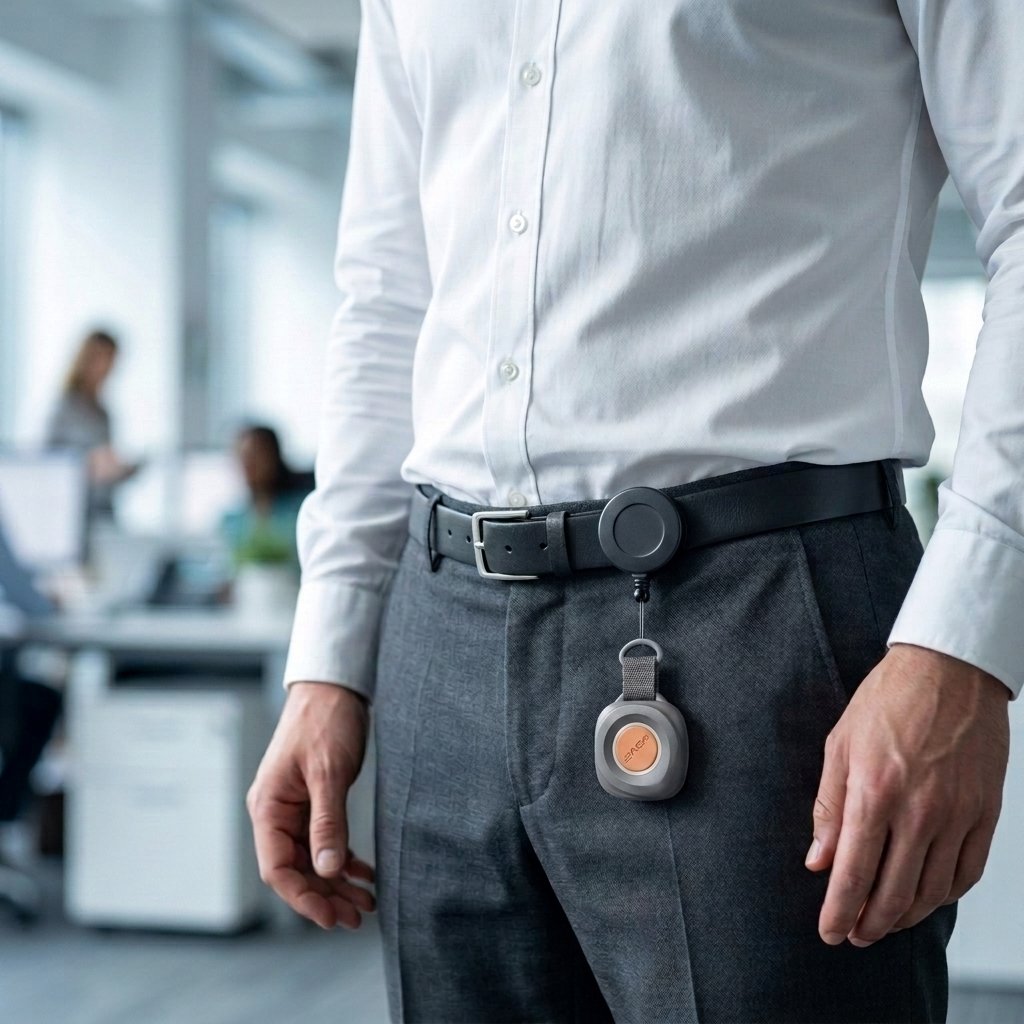
Worn however the site works — wrist band, lanyard, badge reel or clip — it carries who the person is, where they are, and a button that calls for help. The same device is the natural place to put access rights, so the thing people already wear becomes part of the access layer instead of another item to issue.
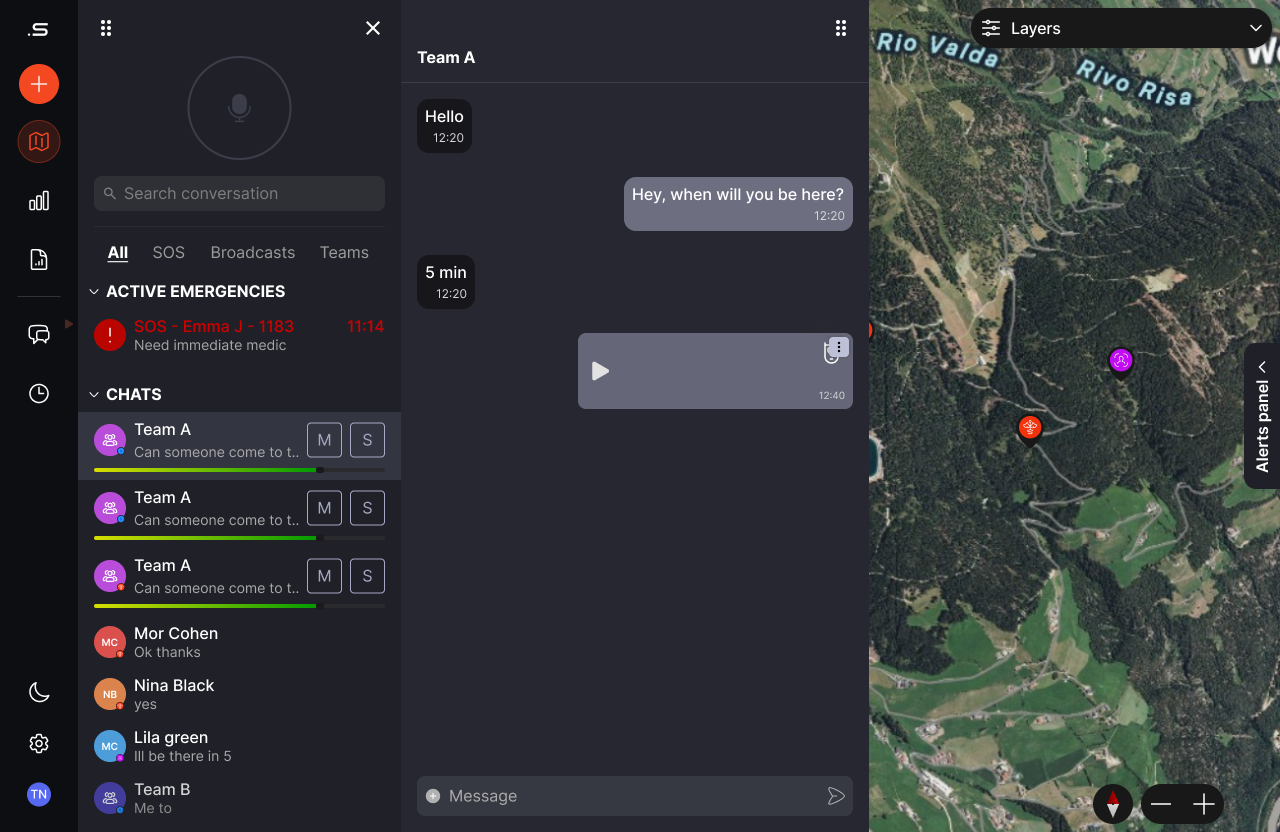
Our command layer: every person, every alarm, every zone on one map, with the response recorded as it happens. Run it as its own operations view, or send the events into the control room and tooling you already have.
No new procedure to learn and nothing to configure. The functionality below is what a deployment delivers on day one.
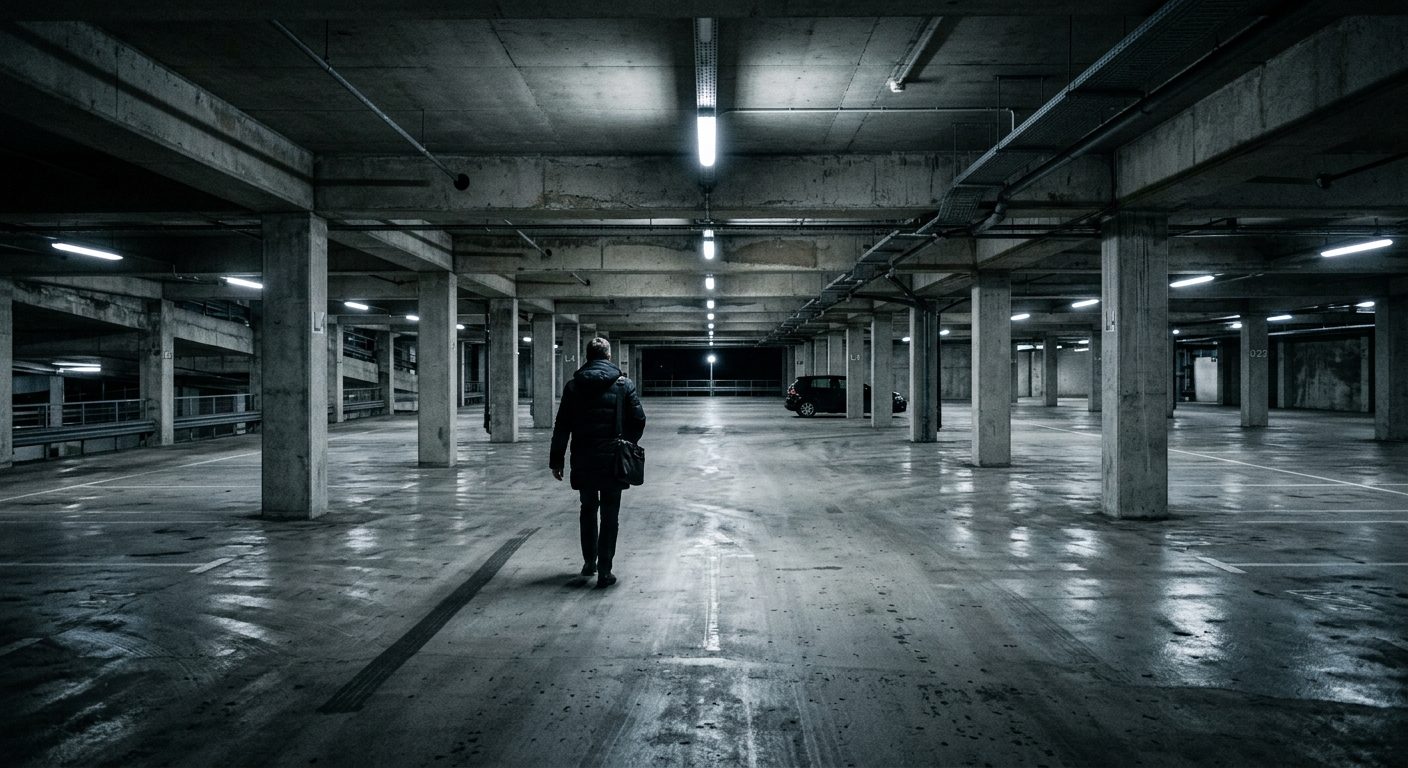
People stay connected and reachable with no cellular signal, no Wi-Fi and no internet — because the network they are using is the one we installed.
One shared picture across every person carrying a device — teams, guards, contractors, visitors — updating on its own, with no roll-call and no radio check.
One press raises an alarm carrying identity and location. Nothing to find in a pocket, no screen to unlock, no signal to wait for.
Building, level and zone indoors; position across the grounds outdoors. The answer arrives as a place on a map, not as a phone number to try.
The wearable is the natural credential — one thing to issue, one thing to revoke, and access rights that live alongside the safety functions rather than in a separate system.
A companion app for enrolment, device status and a second way to raise an alarm — while the wearable itself never depends on the phone being present, charged or in signal.
Alarms and location arrive on an existing operator screen, or through paging and your incident tooling — an added feed, not a second control room to staff.
A person, a place, a moment in time. No records, no personal data, no dependency on a vendor cloud — and it can run entirely inside your perimeter.

From mountain terrain to tactical deployments — the same system, carrying people safely where no other network reaches.
Signed MOU with Boyne Resorts — the 4th-largest US ski network, 12 sites. Tens of thousands of people across terrain with no cellular coverage.
Operating today at a Michigan resort and at an alpine site in Italy.
A parallel tactical programme with the Israeli MOD for GPS-denied, off-grid detection and communication.